
We show from numerous biblical texts that the Great Commission was finished in the first century before the destruction of Jerusalem, and that the literary efforts of the apostles ceased at that time as well. If you wish to have the PDF lesson outline for this podcast, simply email us to request it (preterist1@preterist.org). Be sure to mention the date of the podcast for which you would like to receive the PDF.
Similar Posts
Times of the Gentiles (Lk 21.24)
Premillennialists connect the “Times of the Gentiles” (Lk 21:24) with the “fullness of the Gentiles” (Rom 11:25), and claim that both texts will only be fulfilled after “all Israel” has accepted Jesus as Messiah, returned to the land of Israel, and rebuilt the temple. They see the “times of the Gentiles” as being the whole…
Paul After Release (AD 63-64)
Three of Paul's epistles, First and Second Timothy and Titus, were written after Paul was released from his first imprisonment in Rome. We take a look at Paul's activities after his release and before he was arrested again and killed in the Neronic persecution in AD 64. If you wish to have the PDF lesson…
Signs and Zealot Rebellion – AD 66
We continue looking at the crucial events leading up to the outbreak of the Jewish revolt against Rome in late AD 66. We mention some of the major characters who played a significant role as the rebellion was beginning to take shape, and how the situation there in Judea at this time just before the…
Corinthians & Romans Written – Acts 19-20 (AD 57-58)
We look at the last year or so of Paul’s third missionary journey when he wrote the two epistles to the Corinthians (AD 57), as well as the letter to the Christians in Rome (AD 58). There is a PDF lesson outline available for this podcast. Send an email to preterist1@preterist.org and request it by its date.Support the show
Satan – Influence in World Today?
Since the book of Revelation indicates that Satan was cast into the Lake of Fire at the time of the destruction of Jerusalem in AD 70, most preterists assume that Satan is no longer a factor in our lives after AD 70. However, that may not be a safe assumption. We look at this issue…
Romans – Context and Outline
Two of the key hermeneutical tools we use to interpret any biblical text are: (1) the historical context out of which the book was produced, and (2) the purposes which it was written to accomplish. It also helps if we have a good outline that traces the flow of thought in the text. We provide…
 Resurrection of the Dead (MP3 download)
 Response to Sproul’s Critique (1 track)
 First Generation After AD 70 (MP3 download)
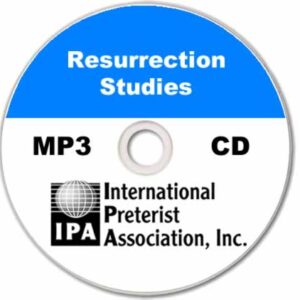 Resurrection Studies (8 tracks)
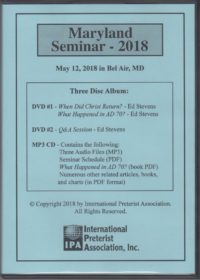 Maryland Seminar 2018 (DVD album)
 Kingdom Parables & AD 70 (1 track)
 Matthew 24 Cannot Be Divided (1 track)
 Israel and the Nations